Where to put leak sensors in a home is a small decision that can make a big routine feel calmer. A leak sensor is not a repair tool, and it does not stop water by itself unless it is part of a shutoff system. Its job is simpler: notice moisture early and send you a reminder to check the spot.
The best locations are not random corners. They are the places where water already enters, drains, heats, chills, washes, or gets hidden behind cabinets and appliances. A sensor works best when it sits where a small drip would reach it quickly, without blocking normal use or sitting in standing water all the time.
This guide keeps the setup practical and conservative. WattCalm provides general smart-home and energy-habit information, not electrical, plumbing, HVAC, or financial advice. Always follow product manuals and hire qualified professionals for wiring, plumbing, or system changes.
Why Leak Sensor Placement Matters
Leak sensor placement matters because water problems often begin out of sight. A slow supply-line drip under a sink, a washing machine hose leak, or moisture near a water heater can stay hidden until the cabinet, floor, or wall already needs attention. A sensor gives you a chance to look sooner.
If you are new to home sensors, it helps to understand the basic idea first. A broader guide to smart home sensors for beginners explains how alerts, placement, and simple routines fit together before you add more devices.
Once the leak sensor is in place, the goal is not to stare at the app every day. The goal is to trust that a clear, specific alert will bring your attention back to a high-risk spot when something changes.
Start With the Highest-Risk Water Areas
Begin with water sources that are hidden, used often, or connected to appliances. Most homes do not need leak sensors everywhere on day one. Start with the few places where an early alert would genuinely change what you do.
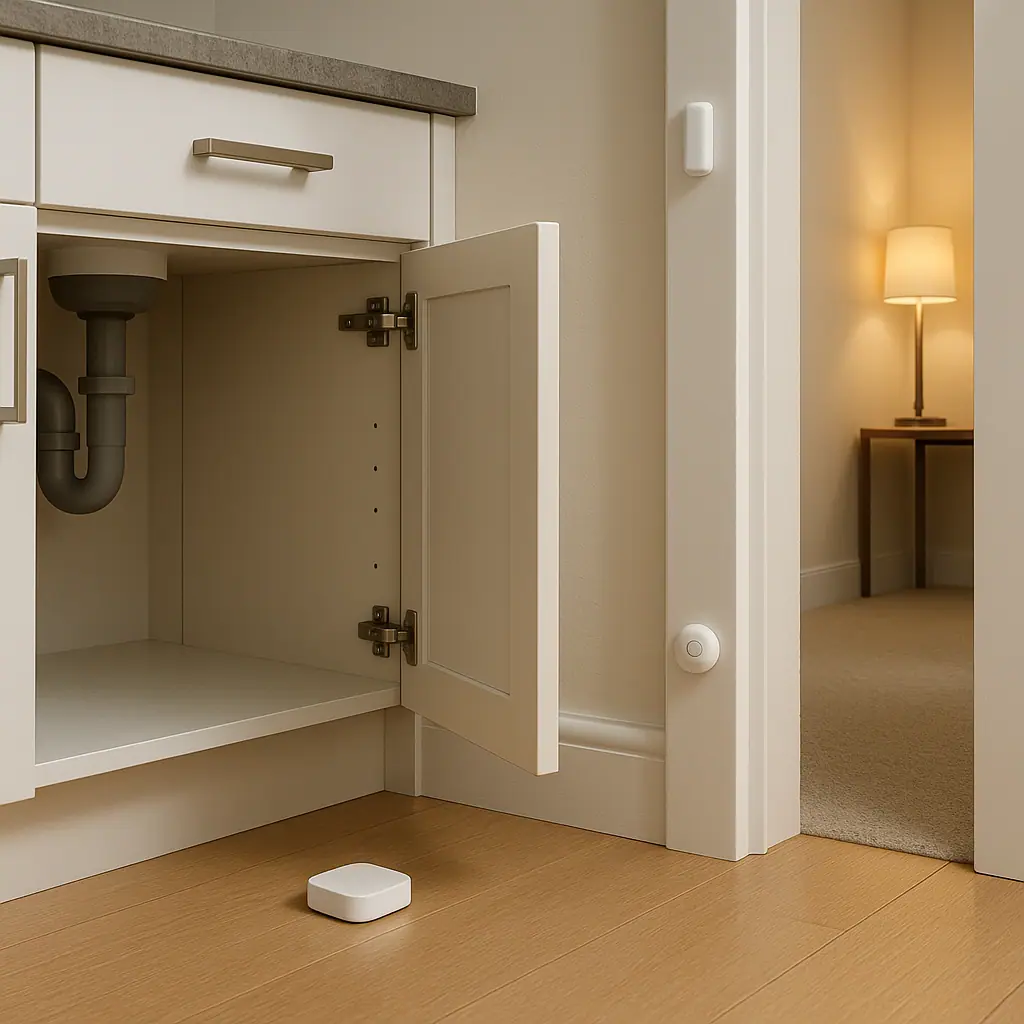
- Under kitchen sinks: place the sensor on the cabinet floor near supply lines, drain joints, or the dishwasher connection if it is reachable.
- Under bathroom vanities: use one near the shutoff valves and drain area, especially in bathrooms used by guests or children.
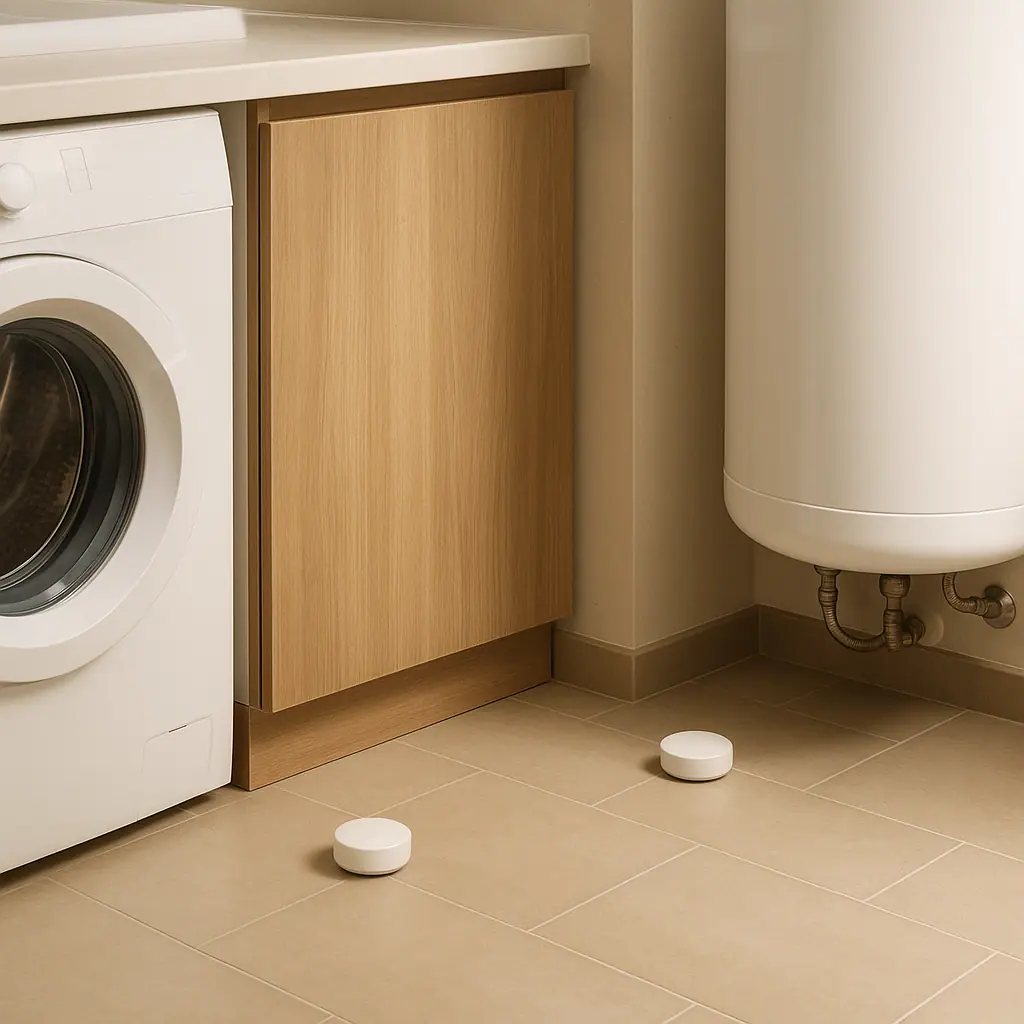
- Near the water heater: place the sensor on the floor close to the pan or base, following the product manual and keeping it away from heat or electrical parts.
- Behind or beside the washing machine: choose a spot near hoses or the floor path where water would appear without being crushed by the appliance.
- Near dishwasher and refrigerator water lines: use accessible spots where a leak could be noticed before reaching finished flooring.
- Basement, utility, or sump areas: place sensors where water would collect first, not on a shelf where moisture would never reach.
Think like water
Water usually moves down and outward. Before placing a sensor, look at cabinet slopes, floor seams, appliance feet, and the path a drip would probably follow. The best spot is often slightly in front of a pipe or appliance, not directly behind it where you cannot reach the device later.
Keep the sensor maintainable
A perfect hidden location is not helpful if you cannot test the sensor, replace the battery, or clean around it. Leave enough access to lift it, dry it, and reset it after an alert.
What to Check Before You Place a Leak Sensor
Before you decide where to put leak sensors in a home, check the sensor instructions and the surrounding conditions. Different models handle moisture, temperature, wireless signal, and battery alerts differently.
- Water exposure limits: some sensors are meant to detect water at contact points, not sit submerged for long periods.
- Wireless range: cabinets, appliances, basements, and metal surfaces can weaken signals, so test from the real spot.
- Battery access: a sensor under a heavy appliance may be hard to maintain when the battery warning appears.
- Alert routing: make sure the person who can respond receives the notification, especially when the sensor is in a basement or vacation property.
- Electrical surroundings: avoid placing a battery sensor where it encourages you to reach near energized, wet, damaged, or unfamiliar equipment.
Electrical safety deserves extra caution when water is involved. ESFI warns that water and electricity are a dangerous combination and advises staying away from submerged electrical equipment until power has been confirmed off by the utility: ESFI flooding and electrical safety guidance.
That guidance is about flood and disaster conditions, but the everyday lesson still matters: a leak alert is a reason to check carefully, not a reason to touch wet electrical equipment or guess around outlets, cords, panels, or appliances.
How to Place Leak Sensors Step by Step
Use the same simple process for each location. This keeps the setup understandable and makes future troubleshooting easier.
- Choose one job for the sensor. Name it clearly, such as kitchen sink leak, washer hose leak, or water heater floor.
- Clean and dry the placement area. Dust, old moisture, and cleaning residue can make testing confusing.
- Pair the device near the router first. Add it to the app before placing it inside a cabinet or behind an appliance.
- Move it to the real location. Check signal strength or app status from the exact spot where it will live.
- Test the alert gently. Follow the manual. Many sensors can be tested with a damp paper towel or a small amount of water on the contacts.
- Name the alert in plain language. Use room and location, not model numbers. Kitchen sink water detected is easier to act on than Sensor 04.
- Write down the battery type and location. A quick note prevents future guessing when the app says the battery is low.
- Review after one week. Confirm the sensor stayed in place, remained connected, and did not create nuisance alerts.
Use more than one sensor only where it solves a real problem
A long appliance wall, finished basement, or utility room may need two sensors if water could travel in more than one direction. But do not buy extra sensors just to fill a map. Add them where a separate alert would change your response.
Consider shutoff systems separately
Some homes use leak detection systems that can alert staff, owners, or even connect to water shutoff devices. IBHS notes that electronic leak detection systems or sensors can be considered as part of water-leak protection planning: IBHS leak detection system guidance.
For a normal household, that does not mean you need a complex system immediately. A simple battery leak sensor near the most likely leak source can be the calmer first step.
Pros and Cons of Using Leak Sensors
Earlier awareness
A sensor can alert you to moisture in a hidden spot before the problem becomes obvious from the outside.
Simple first sensor
Leak sensors are often easier for beginners to understand because the job is clear: water detected means check this location.
Useful for quiet areas
Basements, utility rooms, guest bathrooms, and under-sink cabinets can benefit from alerts because they are not checked constantly.
Placement still matters
A sensor in the wrong spot may stay dry while water travels somewhere else.
It does not replace maintenance
Hoses, valves, pans, drains, and appliances still need normal inspection and professional repair when something looks wrong.
Common Leak Sensor Mistakes to Avoid
The most common mistakes are usually small, but they make alerts less useful.
- Hiding the sensor too well: if you cannot reach it later, battery changes and testing become annoying.
- Skipping the real-location test: pairing on the counter does not prove the sensor works behind the washing machine.
- Using vague names: an alert should tell you exactly where to go.
- Putting sensors only near visible plumbing: appliances, basement corners, and refrigerator water lines can matter too.
- Ignoring repeated alerts: even a small amount of water deserves a real check, not just an app dismissal.
- Touching wet electrical equipment: if water is near outlets, cords, panels, or appliances, stop and get qualified help.
A Simple Leak Sensor Checklist
Use this checklist before you finish each sensor placement.
- Clear location: the device name includes the room and exact spot.
- Likely water path: the sensor sits where a drip or puddle would reach it early.
- Signal confirmed: the app shows the sensor online from its final location.
- Alert tested: the test reached the right phone or household member.
- Access preserved: you can pick up the sensor for cleaning, drying, or battery replacement.
- Review date set: you will recheck placement and battery status after one normal week.
When to Get Extra Help
Get extra help when a leak alert points to a water heater, boiler, HVAC equipment, electrical panel, outlet, appliance cord, ceiling leak, sewage backup, or anything you cannot safely identify. The sensor has done its job by telling you to look. It should not push you into a repair that belongs to a plumber, electrician, HVAC technician, or restoration professional.
You should also ask for help if water returns after you dry the area, if a floor feels soft, if a wall smells musty, or if an appliance keeps producing moisture. A leak sensor is a useful warning tool, but it is not a diagnosis.
Frequently Asked Questions
Where should I put my first leak sensor?
Start under the kitchen sink, near the washing machine, by the water heater, or in another spot where a small hidden leak would matter. Choose the place you rarely inspect but would want to know about quickly.
Should a leak sensor go behind or in front of an appliance?
Place it where water would reach it and where you can still access it. For some appliances, slightly beside or in front of the unit is more practical than directly behind it.
How often should I test leak sensors?
Test after setup, review after one week, and then check battery status and placement about once per season. Also test after moving appliances, changing routers, or cleaning the area.
Can leak sensors prevent water damage?
They can help you notice water earlier, but they do not guarantee prevention. A sensor is one layer of awareness. Maintenance, repairs, shutoff access, and professional help still matter.
Final Thoughts
Where to put leak sensors in a home comes down to a calm, practical question: where would water appear first, and would an alert help you respond sooner? Start with one or two high-risk areas, test each sensor from the real location, and keep the alert name plain.
A useful leak sensor setup is not complicated. It is reachable, tested, clearly named, and tied to a spot you actually want to monitor. That is enough for a strong first routine.