What is a kilowatt-hour? A kilowatt-hour, often shortened to kWh, is a simple way to measure electricity use over time. It is the unit you usually see on an electric bill, and it can help you understand why one device matters more than another.
The phrase sounds technical, but the idea is practical. A watt tells you how much power something uses at a moment. A kilowatt-hour tells you how much energy was used after that power ran for a certain amount of time.
Why a Kilowatt-Hour Matters at Home
A kilowatt-hour matters because your home does not use electricity as one big invisible total. It is built from many small moments: lights on during dinner, a computer running through the workday, a fan used overnight, or a charger left plugged in after a device is full.
The U.S. Energy Information Administration explains that electricity use over time is measured in watthours, and electric utilities commonly measure it in kilowatthours. Their overview of measuring electricity is a useful reference if you want the formal definition behind the everyday number.
For a homeowner or renter, the useful part is not memorizing units. The useful part is knowing that kWh connects three things: how much power a device uses, how long it runs, and how much electricity appears on the bill.
Start With the Basic Formula
The basic formula is simple: watts divided by 1,000, multiplied by hours used. That turns a device label or meter reading into kilowatt-hours.
The simple math
If a 10-watt LED lamp runs for 5 hours, it uses 50 watt-hours. Divide that by 1,000, and the lamp used 0.05 kWh. If a 1,000-watt space heater runs for 1 hour, it uses 1 kWh.
Why time changes everything
Small devices can matter if they run constantly, while large devices may matter less if they run briefly. That is why kWh is more useful than watts alone. It keeps power and time together instead of looking at one number by itself.
- Watts: how fast a device is using electricity at a moment.
- Kilowatts: watts divided by 1,000.
- Kilowatt-hours: kilowatts multiplied by the hours used.
How to Read kWh on a Bill or Meter
Your electric bill usually shows total kWh used during the billing period. It may also show a price per kWh, delivery charges, taxes, fees, or time-of-use rates. WattCalm cannot tell you what your local bill should cost, but the kWh line can still help you understand consumption.
The Department of Energy notes that an electric meter measures electricity use, and that 1,000 watt-hours equals 1 kilowatt-hour. Its page on electric meters gives the classic 100-watt light bulb example and explains why the utility bill uses kWh.
When you compare months, try not to panic over one number. Weather, guests, laundry, cooking, work-from-home days, vacations, and billing-period length can all change the total. Look for patterns before making a big conclusion.
What to Check Before Measuring Devices
If you want to connect kWh to specific devices, start with low-risk plug-in items such as lamps, monitors, chargers, small speakers, or desk accessories. Avoid high-draw, heat-producing, medical, refrigeration, pump, motor, or safety-critical equipment unless the product manual clearly supports the setup.
ENERGY STAR explains that certified products meet energy efficiency criteria set by the U.S. Environmental Protection Agency or Department of Energy. Their page on what makes a product ENERGY STAR is a helpful reminder that official labels and product documentation are better sources than guesswork.
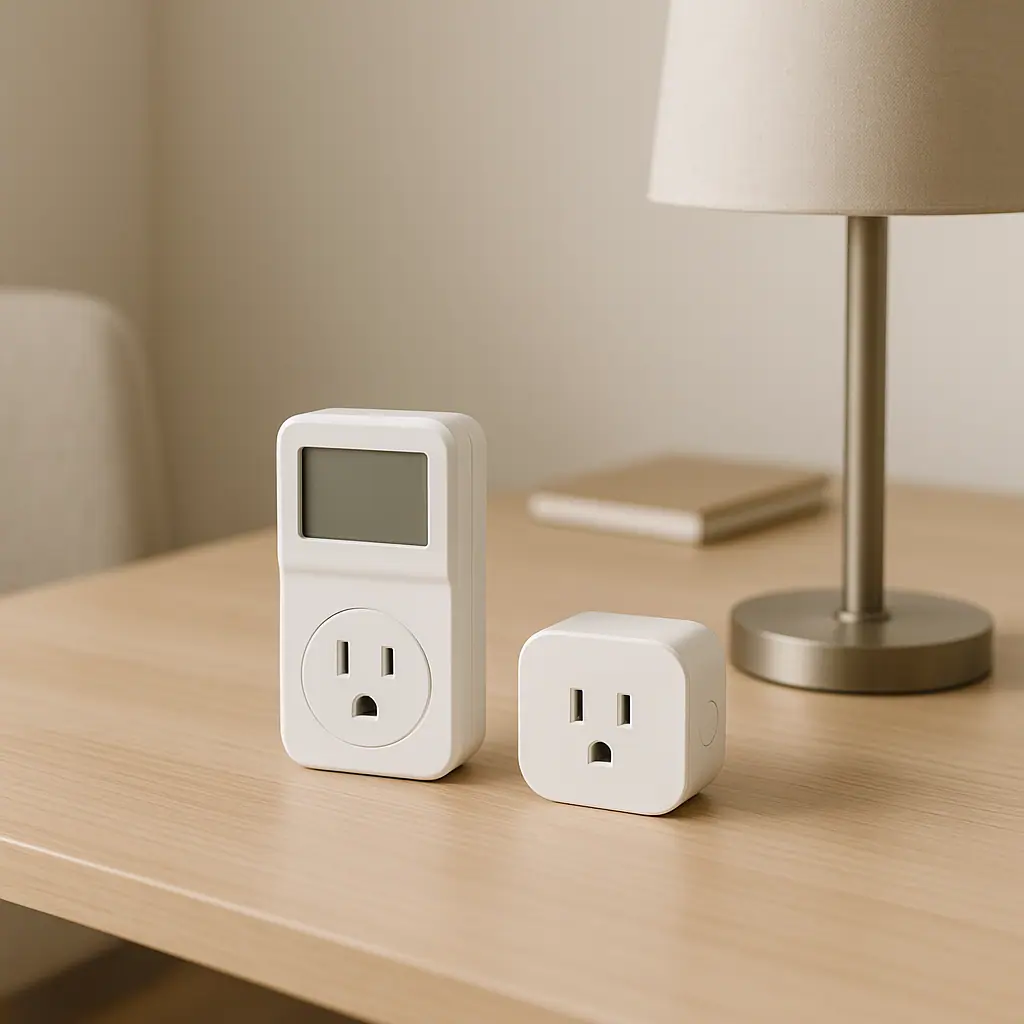
For a simple home check, an outlet meter or smart plug with energy monitoring can show actual use for one plug-in device. If you are comparing tools, the WattCalm guide to outlet meter vs smart plug energy tracking explains when each one fits.
How to Use kWh Step by Step
Use kilowatt-hours to answer one practical question at a time. The number is most helpful when it leads to a calm decision, not a new dashboard you feel pressured to check every day.
- Pick one device: choose something simple, low-risk, and easy to reach.
- Find watts: read the label, manual, or a meter reading.
- Estimate time: write down how many hours it runs in a normal day.
- Calculate kWh: divide watts by 1,000, then multiply by hours.
- Compare gently: ask whether the result changes your routine.
- Make one adjustment: schedule, unplug, replace, or leave it alone if the convenience is worth it.
Common Kilowatt-Hour Mistakes to Avoid
The first mistake is confusing watts with kilowatt-hours. A device with a higher watt rating is not always your biggest issue if it runs for only a few minutes. A lower-watt device can add up if it runs all day.
The second mistake is expecting perfect savings from one small change. Turning off one lamp may be worthwhile as a habit, but it may not dramatically change a household bill. Use kWh as a reality check, not a promise of instant savings.
The third mistake is tracking too many things at once. If you measure every plug in the house, the project can become noisy. Start with one device you already suspect, then decide whether the information was useful.
Pros and Cons of Thinking in kWh
It connects power and time
Kilowatt-hours show why both wattage and hours used matter for real home electricity use.
It matches the bill
Because utilities commonly bill by kWh, the unit helps bridge device habits and monthly totals.
It supports small decisions
A kWh estimate can help you choose whether to schedule, unplug, replace, or stop worrying about one device.
It can feel abstract at first
The unit becomes easier only after you connect it to familiar devices and normal daily use.
It does not explain every bill change
Rates, fees, weather, billing periods, and household routines can affect the final amount you pay.
A Simple Checklist
Use this checklist when you want to make kWh useful without turning it into a complicated home project.
- Unit understood: do you know that kWh means power used over time?
- One device chosen: are you measuring one simple plug-in item first?
- Time included: did you estimate how long the device runs?
- Safety checked: did you avoid high-draw or safety-critical equipment?
- Bill context noted: are you comparing similar months or similar routines?
- Decision clear: will the number change anything useful?
Frequently Asked Questions
What is a kilowatt-hour in one sentence?
A kilowatt-hour is the energy used when 1,000 watts run for one hour, or an equivalent amount spread across a different wattage and time.
Is kWh the same as watts?
No. Watts describe power at a moment, while kilowatt-hours describe energy used over time.
How often should I review kWh use?
Monthly bill review is enough for most beginners. Device-level checks are useful when you are deciding whether a specific routine should change.
Can I lower kWh use without smart-home gear?
Yes. Turning off unused devices, choosing efficient products, and shortening run time can all reduce use. Smart plugs and meters simply make some habits easier to see.
Final Thoughts
What is a kilowatt-hour? It is a practical unit for electricity use over time. Once you understand that, your bill and simple device checks become less mysterious.
Start with one low-risk device, one normal day, and one clear question. If the kWh number helps you make a calmer routine, keep it. If it does not change anything useful, you can let that device be and move on.