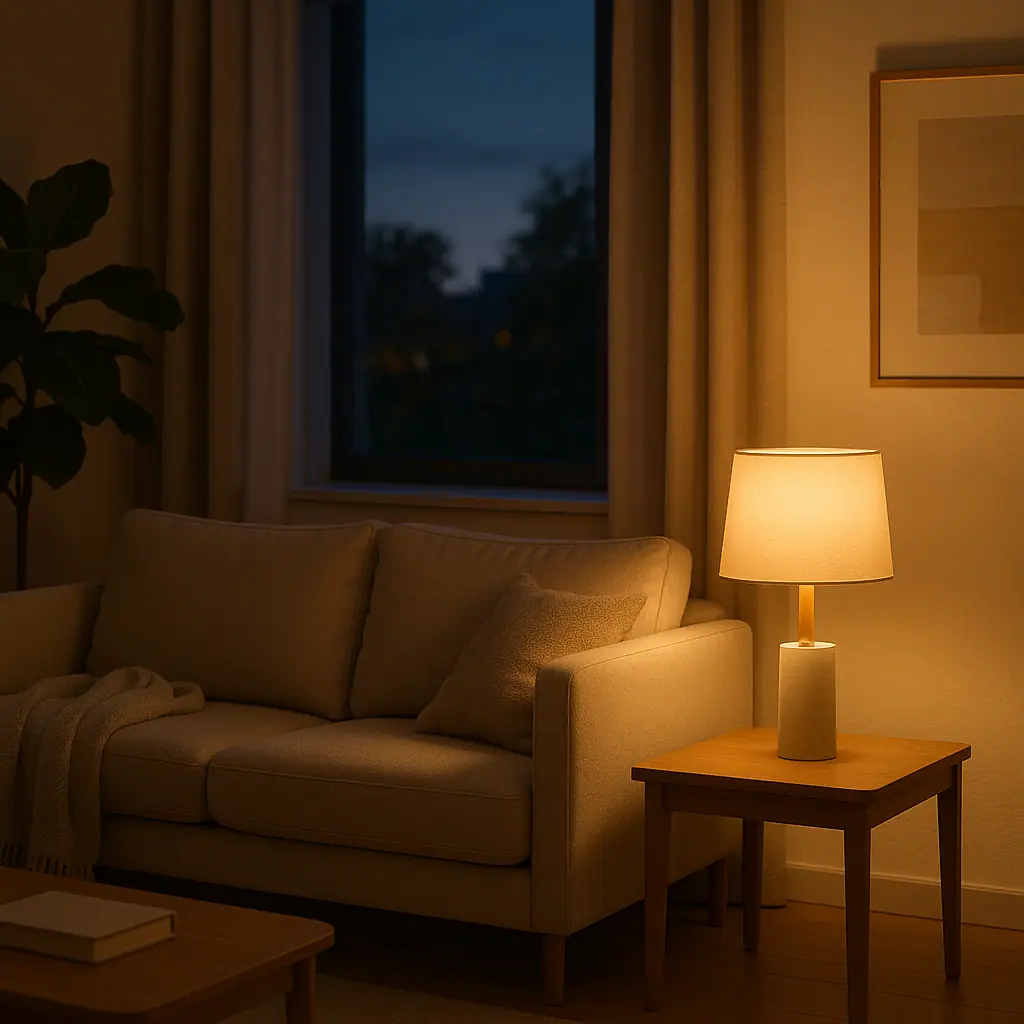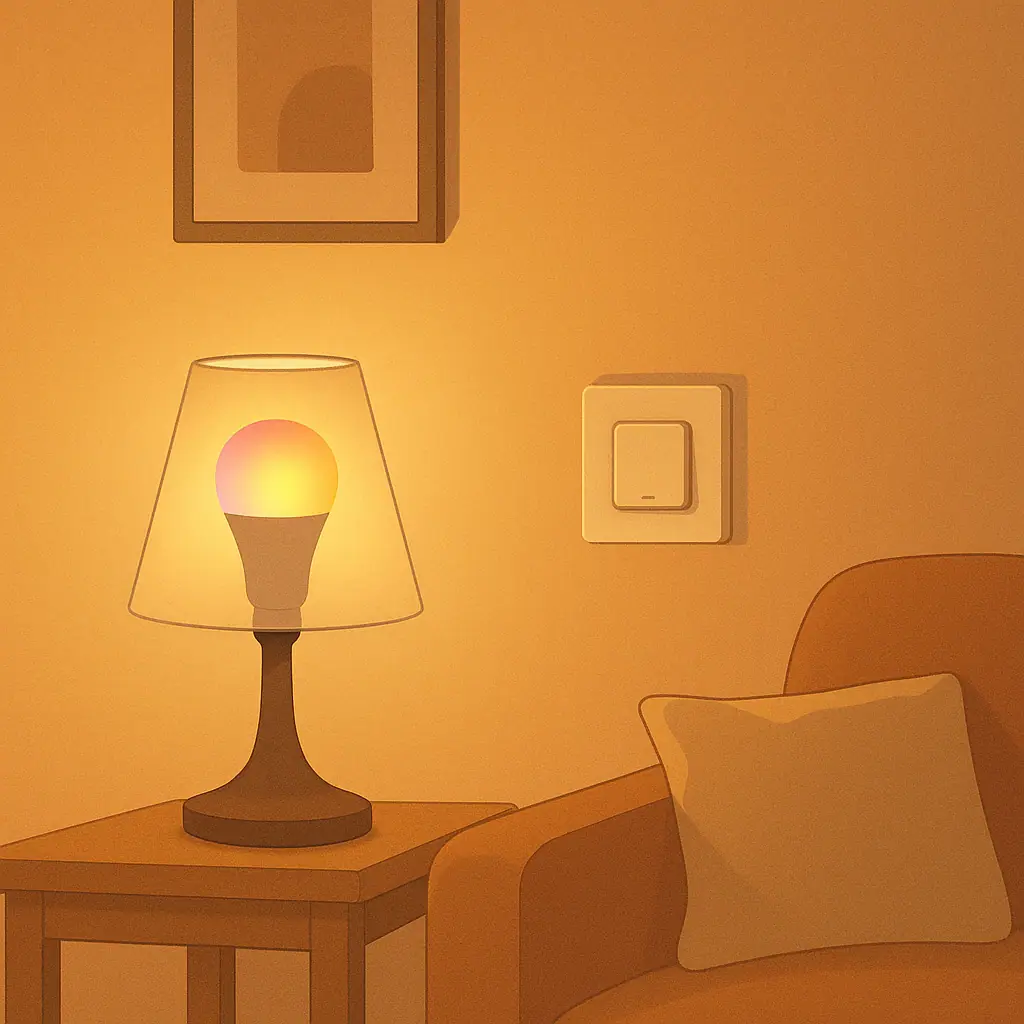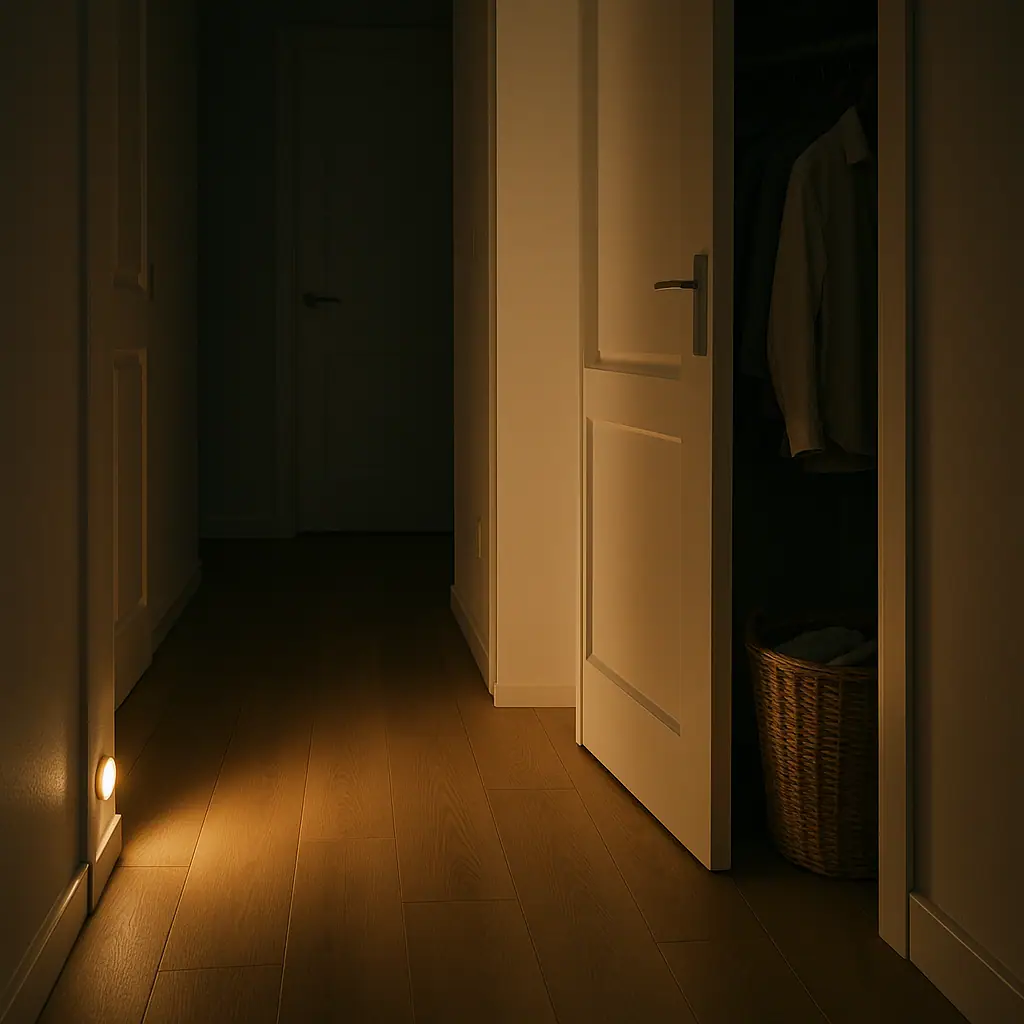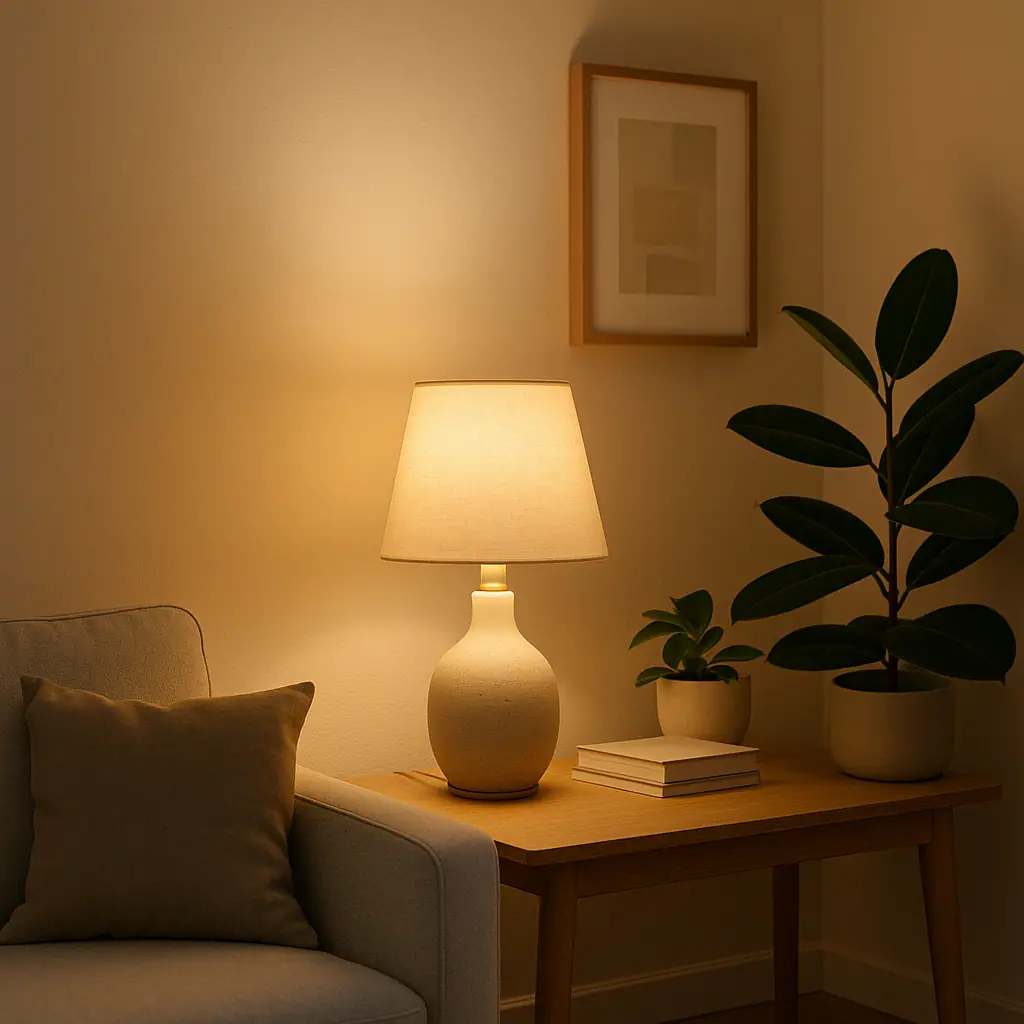
Smart bulb mistakes beginners make usually come from trying to solve too much at once. A smart bulb should make one room easier to use: a softer bedside lamp, a clearer kitchen task light, or a hallway that turns on at a sensible time. When the setup becomes a pile of scenes, colors, schedules, and app names, the light starts feeling less calm than the old switch.
The good news is that most smart bulb problems are easy to prevent. You do not need to become an electrician or build a whole smart-home system. You only need to check the fixture, understand the switch habit, pick a simple routine, and review whether the bulb is actually helping the room.
Why This Matters
Lighting is one of the first smart-home upgrades many people try because it feels familiar. A bulb is small, affordable, and reversible. But it still works inside a real fixture with real heat limits, power habits, Wi-Fi limits, and household expectations.
That is why smart bulb mistakes beginners make are worth catching early. A bulb that loses power every night, flickers in the wrong dimmer, or changes to a strange color at dinner can make everyone distrust the setup. A calm first setup does the opposite: it works quietly enough that people forget it is smart.
Start With Smart Bulbs, Lighting, and Motion
Smart bulbs, lighting, and motion routines are easiest when each device has one clear job. A bulb can dim for evening comfort. A motion sensor can help a hallway. A schedule can turn a lamp on before someone gets home. Problems start when all three ideas are added to the same room before the first habit is tested.
Think of the first smart bulb as a small room experiment. Choose a lamp people already use often. Avoid ceiling fixtures, enclosed fixtures, hardwired dimmers, and lights controlled by several switches until you understand how the bulb behaves in a simple lamp.
What to Check First for Smart Bulb Mistakes Beginners Make
Before opening the app, check the physical setup. Smart bulbs are still bulbs, so the fixture and product instructions matter more than any automation idea.
Fixture fit and heat limits
Confirm the socket type, bulb shape, wattage equivalent, and fixture guidance. Do not put a smart bulb in an enclosed fixture unless the bulb manual or package clearly says it is suitable for that use. Heat can shorten bulb life and create avoidable risk.
Wall switch habits
Most smart bulbs need constant power to stay connected. If someone turns the wall switch off, the app may show the bulb as offline and schedules may not run. This is not always a broken bulb; often it is a habit mismatch.
Light appearance and brightness
Do not confuse color temperature with brightness. ENERGY STAR's light bulb factsheet explains light appearance with the Kelvin scale, while brightness is shown separately in lumens. For everyday use, compare both instead of choosing only by words like warm, cool, or daylight.
How to Handle Smart Bulb Mistakes Beginners Make Step by Step
- Pick one room problem: Choose a specific issue, such as a lamp that is too bright at night or a hallway that needs a predictable evening light.
- Use a simple lamp first: Start with a standard lamp that is easy to unplug and does not depend on a wall dimmer.
- Check the manual before special use: Look for enclosed fixture, outdoor, damp-location, dimmer, and temperature guidance before using the bulb outside a normal indoor lamp.
- Name the bulb plainly: Use names like Bedside Lamp or Living Room Corner. Clear names prevent voice assistant and app confusion later.
- Create one routine: Try one schedule, one dimming level, or one warm evening scene. Avoid building five scenes on the first day.
- Leave a manual backup: Make sure family members and guests can still use the light without learning a complicated command.
- Review after real use: After a week, ask whether the bulb made the room easier. If not, adjust the routine before buying more devices.
Common Smart Bulbs, Lighting, and Motion Mistakes to Avoid
The first mistake is buying a multi-pack before testing one room. Smart bulbs vary by app, color quality, brightness, Wi-Fi behavior, and fixture guidance. One test bulb tells you more than a shopping cart full of assumptions.
The second mistake is putting a smart bulb behind a wall dimmer without checking compatibility. If the bulb flickers, buzzes, refuses to dim smoothly, or behaves oddly, pause and read the bulb and dimmer instructions. The Electrical Safety Foundation International shares general home electrical safety guidance at ESFI's home electrical safety resource, which is a useful reminder not to guess when electrical behavior seems unusual.
The third mistake is using strong colors as the daily default. Color scenes can be fun, but most rooms feel calmer with a simple white setting that matches the task: warmer for evening comfort, brighter or cooler for short task work.
The fourth mistake is overusing motion. Motion control can be helpful in a hallway, pantry, laundry area, or entry path. It can become annoying in living rooms, bedrooms, and offices where people sit still. If a light turns off while someone is reading, the automation is not serving the room.
A Simple Checklist
- One problem: The bulb should solve a clear room issue, not prove that the whole house can be automated.
- One lamp: Start with a simple indoor lamp before trying ceiling fixtures, dimmers, or motion rules.
- One routine: Use one schedule or scene until it feels reliable.
- Clear names: Label devices by room and object, such as Hall Lamp or Desk Lamp.
- Fixture check: Match socket, location, heat guidance, and enclosed-fixture rules before use.
- Switch check: Keep power available if the bulb needs to stay online for routines.
- Weekly review: Change timing, brightness, color, or location one at a time.
Pros and Cons of Smart Bulbs for Beginners
Easy to test in one place
A single lamp can show whether smart lighting fits your household before you invest in more devices.
Good for simple comfort routines
Warm evening scenes, lower brightness, and predictable schedules can make a room feel calmer with little effort.
Reversible when kept simple
Most app schedules, scenes, and bulb names can be edited or removed if the first idea does not fit real life.
Wall switches can break routines
If power is cut at the switch, the bulb may go offline and miss schedules until power returns.
Fixture limits still matter
Smart features do not remove heat, location, socket, or dimmer compatibility requirements.
Too many scenes create friction
A setup with several colors, names, sensors, and schedules can confuse the household instead of helping it.
When to Get Extra Help
Get extra help when the issue goes beyond a simple bulb in a normal lamp. Hardwired switches, fixture replacement, unusual dimmers, buzzing, repeated flicker, heat concerns, and outdoor or damp-location use all deserve product-manual checks and qualified support when needed.
Also slow down if the app instructions have changed, a device label is unclear, or you are not sure whether the bulb is suitable for the fixture. Do not guess. The calmest smart-home setup is the one you understand well enough to undo.
Frequently Asked Questions
What should I check first with smart bulb mistakes beginners make?
Check the fixture and switch habit first. Make sure the bulb is suitable for the lamp and can stay powered for schedules.
How often should I review a smart bulb routine?
Review it after the first week, then only when the room habit changes. A useful routine should not need daily attention.
What should I do if I am not sure?
Pause before changing more settings. Read the bulb manual, check the fixture guidance, or ask qualified help if the concern involves wiring, heat, flicker, or dimmers.
Can I undo these changes later?
Yes. Most bulb names, scenes, schedules, and brightness settings can be changed in the app. Keep the first setup simple so it is easy to reverse.
Final Thoughts
Smart bulb mistakes beginners make are usually not dramatic; they are small mismatches between the room, the fixture, the switch, and the routine. Fix those basics and smart lighting becomes much calmer.
Start with one lamp, one clear job, and one routine. If the bulb makes the room easier without forcing everyone to think about it, you are using smart lighting the right way.