Learning how to use smart plugs for lamps without making your home annoying starts with one modest goal: make a light turn on or off at the right moment without adding noise, confusion, or surprise.
A lamp is one of the easiest places to begin because it is visible, low drama, and easy to undo. The mistake many beginners make is trying to automate every lamp at once. A calmer setup begins with one lamp, one clear routine, and a quick safety check before anything gets scheduled.
Why This Matters
Smart plugs can make an entry lamp, reading lamp, or evening corner light feel more useful. They can also become irritating if they turn off while someone is still reading, blink on too early in a bedroom, or depend on an app setting nobody else in the house understands.
The best lamp routine is boring in a good way. It should support a habit you already have, such as arriving home after dark, settling down in the evening, or keeping one room softly lit before bedtime.
Start With Smart Plugs and Outlet Routines
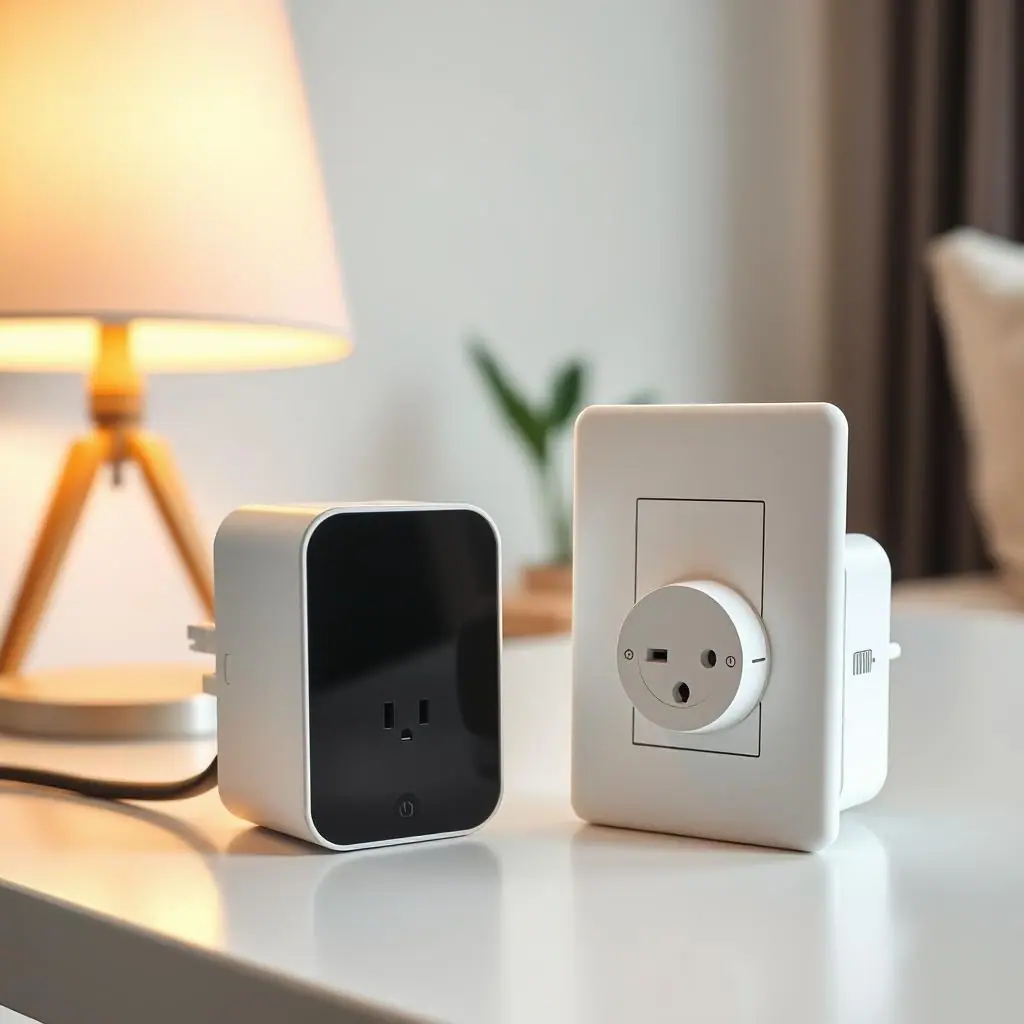
Before choosing schedules or voice commands, check the lamp itself. A smart plug controls power to the outlet, so it works best with a lamp that has a physical on/off switch left in the on position. If the lamp uses a touch control, multi-mode button, or built-in electronics that reset after power loss, test it manually first.
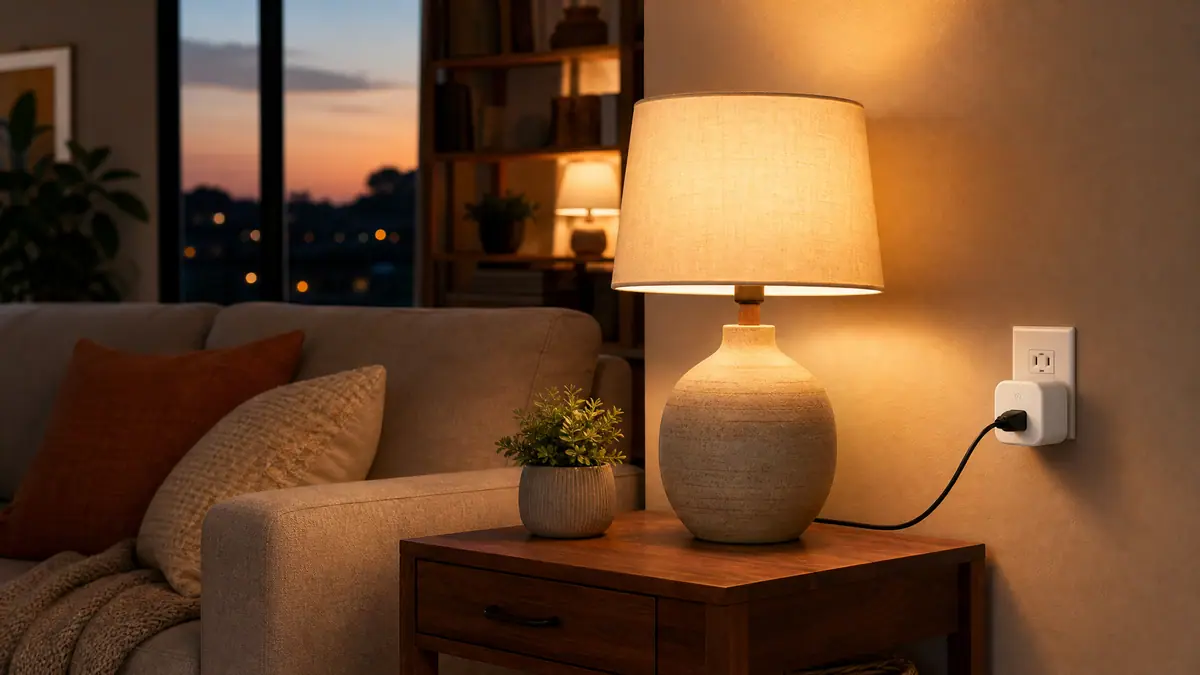
Plug the lamp into the smart plug, turn the lamp switch on, then turn the smart plug off and back on from the app. If the lamp comes back on exactly as expected, it is a good candidate. If it stays off, changes brightness, or forgets its last mode, choose a simpler lamp.
What to Check First for Lamp Smart Plugs
Safety comes before convenience. Use only a smart plug that is rated for the lamp load, and follow the smart plug manual. Most ordinary table lamps use far less power than heaters or large appliances, but you should still check the wattage label on the bulb and lamp before assuming anything.
The Electrical Safety Foundation International explains that cords and temporary power products should be rated for the device being used and should not be overloaded. Their extension cord safety guidance is a useful reminder to avoid treating plug-in accessories as a workaround for unsafe outlet habits.
Use the right kind of lamp
Pick a lamp with a simple mechanical switch, a stable shade, and a cord that is not frayed, pinched, or stretched across a walkway. Avoid using a smart plug as a fix for damaged cords, loose outlets, or hard-to-reach wiring problems.
Keep the routine visible
If other people use the room, the lamp should still make sense. A small label on the plug is not necessary, but the behavior should be predictable enough that nobody has to ask why the light suddenly changed.
How to Use Smart Plugs for Lamps Step by Step
- Choose one lamp: start with an entryway, living room, or reading lamp that already gets turned on and off most days.
- Check the lamp behavior: confirm that the lamp turns back on after the smart plug cuts and restores power.
- Name it plainly: use a name like Entry Lamp or Reading Lamp instead of a joke or room nickname.
- Create one schedule: begin with a simple evening on time or bedtime off time. Leave advanced triggers for later.
- Test for three days: watch whether the schedule helps or annoys people in real use.
- Adjust slowly: move the time by 15 or 30 minutes instead of rebuilding the whole routine.
A good first routine is an entry lamp that turns on shortly before the household usually arrives home. A second good routine is a living room lamp that turns off after the normal bedtime window, as long as it does not interrupt someone who regularly stays up later.
Common Smart Plugs and Outlet Routine Mistakes to Avoid
The first mistake is setting too many automations. A sunrise scene, sunset scene, voice routine, away mode, and bedtime routine can all fight each other if they control the same lamp. Start with one schedule and add only after the first one feels reliable.
The second mistake is hiding control inside one person's phone. If the household depends on the lamp, make sure another person knows how to turn the plug on and off from the app, voice assistant, or physical button on the plug.
The third mistake is using a smart plug where a normal switch is still better. A bedside lamp, for example, may be more annoying if the app turns it off while someone is reading. Convenience should feel quieter than the old habit.
Easy to undo
You can remove the schedule, unplug the smart plug, or move it to another lamp without changing wiring.
Useful for repeat routines
Entry lights, evening lamps, and vacation-like presence routines are simple starting points.
Still works as a normal lamp
The lamp can stay familiar when the plug has a physical button and the schedule stays simple.
Bad timing feels disruptive
A lamp that turns off during normal use quickly becomes more irritating than helpful.
Not every lamp remembers power state
Touch lamps and special-mode lamps may not turn back on properly after smart plug control.
A Simple Checklist
- Lamp type: simple physical switch, no damaged cord, no strange reset behavior.
- Plug rating: smart plug manual supports the lamp's load and intended indoor use.
- Schedule: one clear on or off routine, tested for several days.
- Household fit: nobody is surprised by the lamp changing at the wrong time.
- Fallback: physical button or app control is easy to find when the schedule is wrong.
When to Get Extra Help
Do not guess if an outlet is loose, a cord feels warm, a plug does not fit securely, or a lamp has visible damage. Those are not smart-home setup problems. They are reasons to stop and check the product manual or ask a qualified professional.
It is also worth getting help if you are trying to control built-in lighting, wall switches, ceiling fixtures, or anything that would require wiring changes. A plug-in lamp routine should stay plug-in, reversible, and simple.
Frequently Asked Questions
What should I check first before using a smart plug with a lamp?
Check that the lamp turns back on correctly after power is restored, then confirm the smart plug is rated for the lamp and intended indoor use.
How often should I review the schedule?
Review it after the first few days, then again when seasons, work hours, or bedtime routines change.
What should I do if I am not sure the setup is safe?
Stop using the smart plug for that lamp until you can check the product manuals or ask a qualified professional about the outlet, cord, or load.
Can I undo the routine later?
Yes. Most lamp routines can be deleted in the app, paused, or replaced with a simpler schedule without changing the lamp itself.
Final Thoughts
The least annoying way to use smart plugs for lamps is to begin with one lamp and one routine that removes a small daily friction. If the light feels predictable after several days, keep it. If it creates surprises, simplify the schedule or move the smart plug somewhere better.
Smart home comfort is not about making every light automatic. It is about choosing the few automations that quietly support how the home already works.