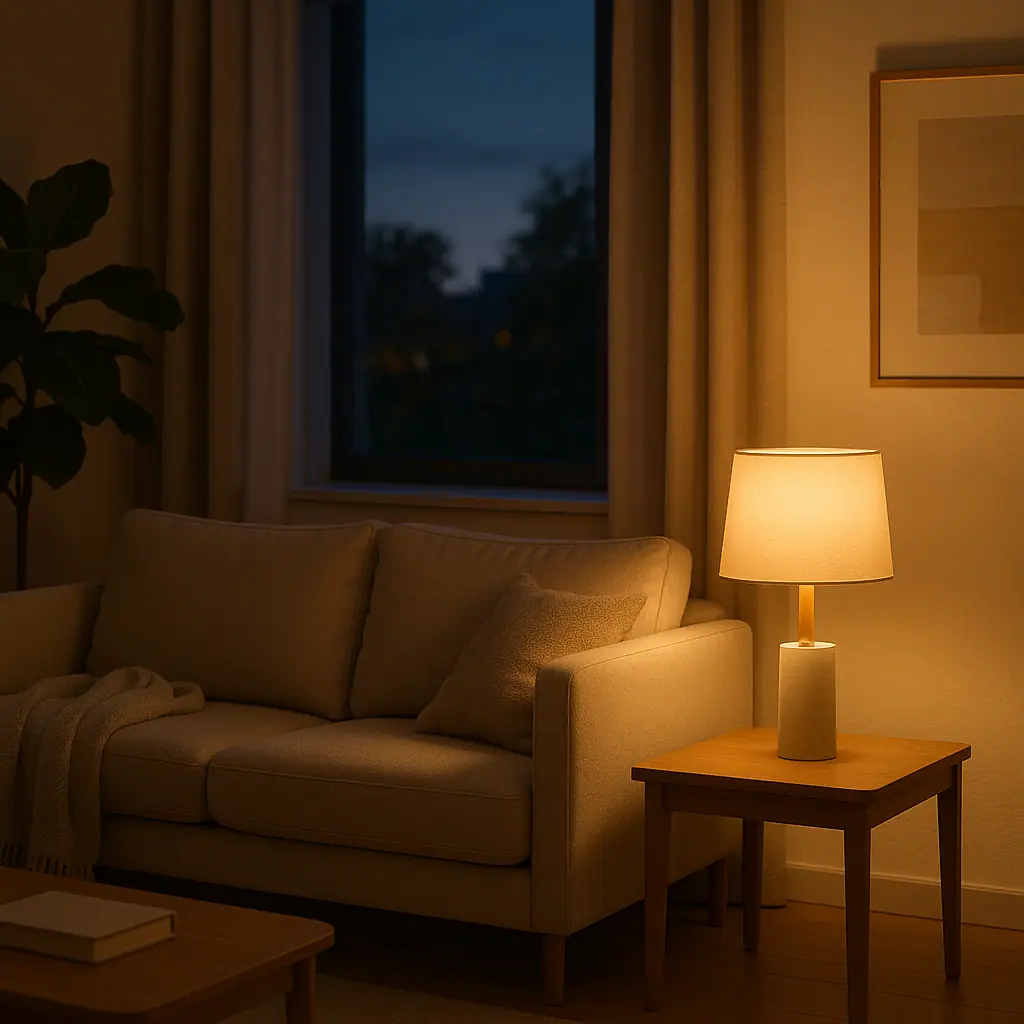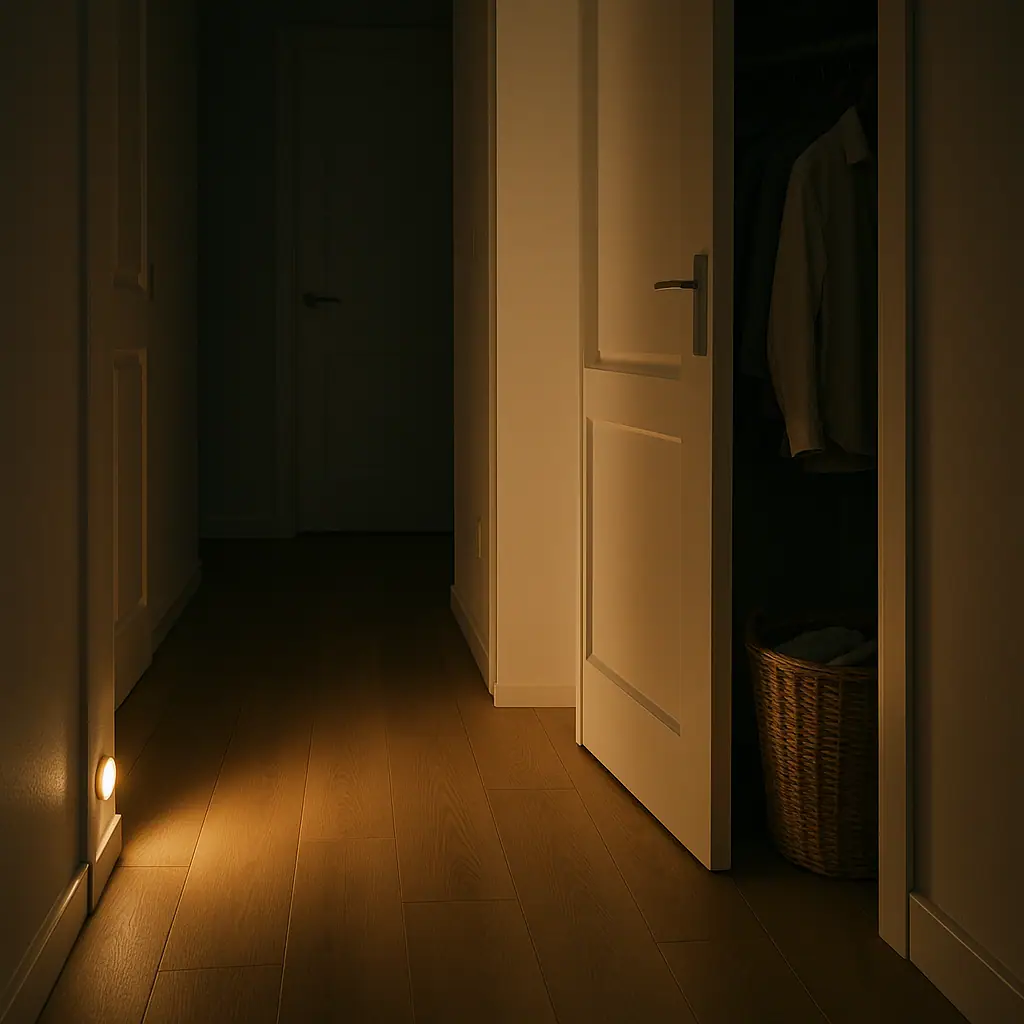
Are smart bulbs worth it for renters? They can be, but only when they solve a real lighting problem without adding lease risk, wiring work, or daily frustration. A renter does not need a whole smart-home system to benefit from one useful bulb. The best first use is usually a lamp that already matters: a bedside lamp, a living room corner light, or an entry lamp that makes coming home feel easier.
The renter-friendly advantage is reversibility. A smart bulb can usually move with you, does not require changing a switch, and can be removed before move-out. The tradeoff is that smart bulbs still need the right fixture, steady power, simple app habits, and household agreement. If the wall switch is always turned off, the smart part may stop helping.
Why This Matters
Renters often want better lighting without drilling, rewiring, or asking for a complicated approval. Smart bulbs look tempting because they seem small and portable. That is mostly true, but the useful question is not whether a bulb is smart. The useful question is whether it makes the room calmer in a way a regular LED bulb cannot.
A smart bulb is most worthwhile when it changes a repeated habit. Maybe the bedroom light needs to fade down at night. Maybe the living room lamp should turn on before you arrive home. Maybe a desk lamp should have one brighter work setting and one softer evening setting. If the bulb only adds colors you rarely use, it may not be worth the extra cost.
Start With Smart Bulbs, Lighting, and Motion
Smart bulbs, lighting, and motion routines work best for renters when the setup stays removable. A bulb in a table lamp is easier to test than a ceiling fixture controlled by multiple switches. A simple schedule is easier to live with than a chain of app scenes, motion rules, and voice commands.
The first decision is not brand or color range. It is room fit. Choose a light people already use every day. If the light is rarely turned on, automation will not change much. If the light is used at the same time most evenings, a schedule or dimming routine may feel useful quickly.
What to Check First Before Buying
Before deciding if smart bulbs are worth it for renters, check the basics that affect comfort and safety. The bulb has to fit the lamp, the app has to fit your patience, and the routine has to fit the way people already use the room.
Fixture and lease fit
Use a plug-in lamp or a fixture where changing the bulb is normal renter maintenance. Avoid changing switches, wiring, or built-in fixtures unless your lease and property owner clearly allow it. Do not use a smart bulb in an enclosed fixture, outdoor fixture, damp area, or unusual lamp unless the product manual says that use is allowed.
Brightness and color comfort
Brightness is measured in lumens, while light appearance is usually described with color temperature. ENERGY STAR's energy-saving tips for renters point renters toward efficient LED lighting as a low-cost place to start. For smart bulbs, compare the lumen output and choose a comfortable white range before worrying about party colors.
Switch habits
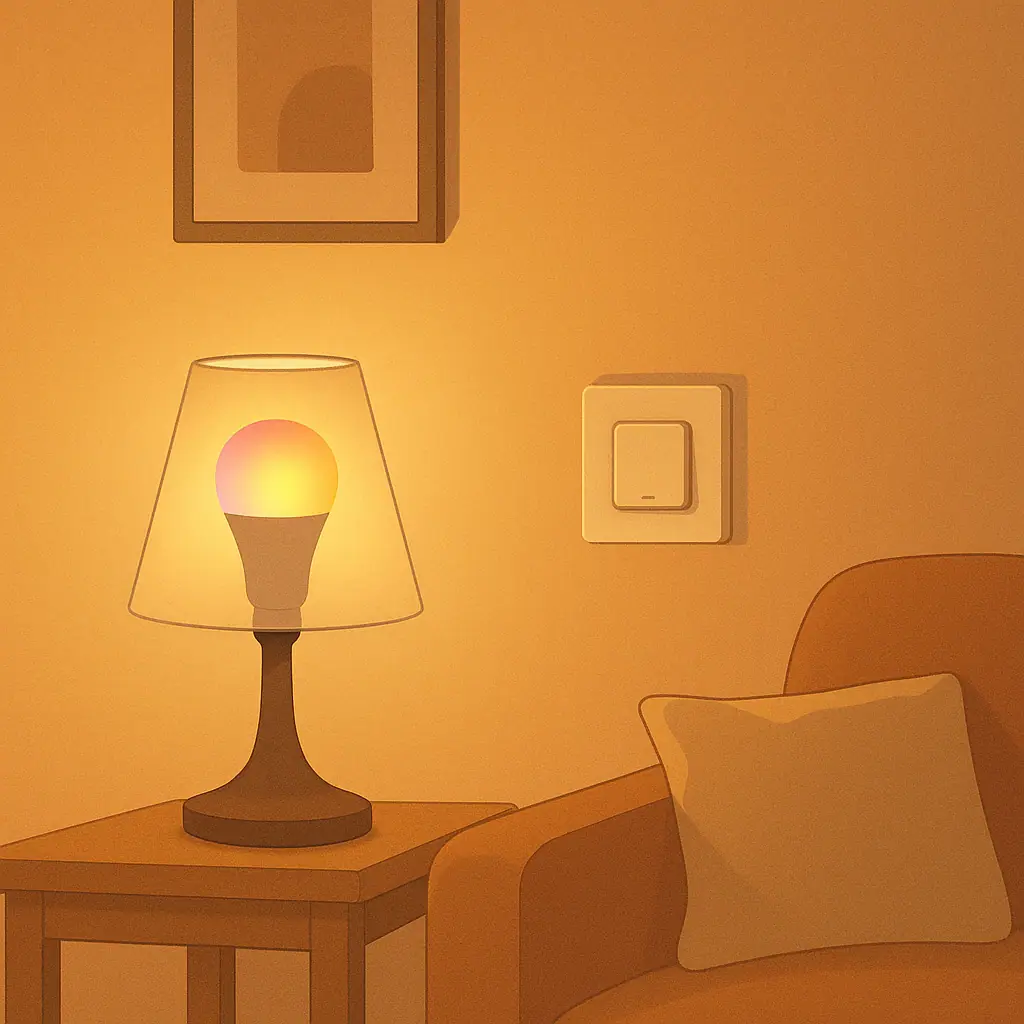
Most smart bulbs need the wall switch left on so the bulb can receive commands. If everyone in the apartment naturally turns the switch off, the app may show the bulb offline and schedules may fail. That does not mean smart bulbs are useless; it means the first bulb should go in a lamp where the switch habit is easy to control.
How to Decide Step by Step
- Name the exact problem: Write down the room annoyance, such as a lamp that is too bright at night or a dark entry when you arrive home.
- Choose a removable location: Pick a standard indoor lamp before trying ceiling lights, dimmers, outdoor fixtures, or shared building areas.
- Check the bulb requirements: Confirm socket size, fixture type, Wi-Fi or hub needs, enclosed-fixture guidance, and whether the bulb works with your preferred app or assistant.
- Start with one white-light routine: Use a schedule, dimming level, or warm evening setting before building color scenes.
- Leave manual control clear: Make sure guests or roommates can still turn the lamp on without learning a complicated system.
- Review after two weeks: If the bulb quietly improves the room, it may be worth keeping. If people keep fighting the switch or app, move it or return to a regular LED bulb.
When Smart Bulbs Are Worth It for Renters
Smart bulbs are usually worth it when they add comfort, timing, or flexibility that a basic bulb cannot provide. A renter who wants soft evening light can use a warm dimmed scene without replacing a fixture. Someone with an irregular schedule can turn a lamp on before arriving home. A person who dislikes bright overhead light can create a calmer lamp-based routine.
They also make sense when you move often. A smart bulb can go into a box, travel to the next apartment, and start again in a different lamp. That portability is a real advantage over hardwired smart switches, especially when the lease is strict.
The value is weaker if every lamp already has a good regular LED bulb and nobody needs schedules, dimming, remote control, or color temperature changes. A smart bulb is not automatically a money-saving device just because it is smart. Its value comes from the routine it supports.
Common Smart Bulbs, Lighting, and Motion Mistakes to Avoid
The biggest mistake is buying a multi-pack before testing one room. Smart bulbs vary by brightness, app quality, wireless reliability, and color comfort. One bulb in one lamp gives you better evidence than guessing for the whole apartment.
Another mistake is putting the bulb somewhere the wall switch is always turned off. Smart bulbs usually need standby power for schedules and app control. If the switch habit cannot change, a regular LED bulb or a plug-in smart plug for the lamp may be a calmer choice.
Renters should also avoid treating safety questions as app problems. Flicker, buzzing, heat, unusual smells, damaged cords, or dimmer trouble should be handled by stopping, checking manuals, and getting qualified help when needed. The Electrical Safety Foundation International has a practical home electrical safety resource that is worth reviewing when outlet, cord, or fixture concerns come up.
A Simple Checklist
- Clear room problem: The bulb should solve a specific annoyance, not just add a new gadget.
- Removable setup: Use a normal lamp or renter-allowed fixture where the bulb can leave with you.
- Manual checked: Confirm socket, enclosed-fixture limits, dimmer guidance, and location ratings.
- Comfortable light: Choose enough lumens and a useful white range before choosing color features.
- Switch plan: Keep power available if schedules and app control matter.
- One routine: Test one schedule, scene, or dimming level before adding more rules.
- Move-out friendly: Keep the original bulb if you need to restore the apartment later.
Pros and Cons for Renters
Portable and reversible
A smart bulb can usually move to another lamp or another apartment without changing the property.
Useful comfort routines
Dimming, warm evening light, and simple schedules can make a room feel better without new wiring.
Low-risk first experiment
One bulb in one lamp is a practical way to test smart lighting before buying more devices.
More expensive than basic LEDs
If you only need efficient light, a regular LED bulb may be the better value.
Switch habits can frustrate routines
If someone turns the wall switch off, app control and schedules may stop working until power returns.
Fixture limits still apply
Smart features do not override heat, enclosed-fixture, dimmer, damp-location, or manual guidance.
When to Get Extra Help
Get extra help when the decision moves beyond a bulb in a normal lamp. Hardwired switches, fixture replacement, old dimmers, buzzing, repeated flicker, warm fixtures, damaged cords, outdoor locations, and damp areas all deserve careful verification.
Also pause if your lease language is unclear. Renters should not guess about permanent changes, shared areas, or anything that affects building wiring. A smart bulb should be a small reversible habit, not a project that creates move-out stress.
Frequently Asked Questions
Are smart bulbs worth it for renters in every room?
No. They are most useful in rooms where timing, dimming, or comfortable light settings solve a real daily problem.
How often should I review the routine?
Review it after the first two weeks, then only when the room habit changes. A good lighting routine should feel quiet and predictable.
What should I do if I am not sure about a fixture?
Do not guess. Check the bulb manual, fixture guidance, lease rules, or ask qualified help if the concern involves heat, dimmers, wiring, or unusual behavior.
Can I undo a smart bulb setup later?
Yes. In most simple lamp setups, you can remove the bulb, delete schedules, and reinstall a regular bulb before moving out.
Final Thoughts
Are smart bulbs worth it for renters? Yes, when they stay simple, removable, and tied to one real room habit. They are less worthwhile when the goal is vague, the switch habit fights the setup, or a regular LED bulb would do the same job for less money.
Start with one lamp, one routine, and one honest review period. If the light makes the apartment easier to live in without making anyone think about technology, the bulb has earned its place.